


From Lab to Market: How Two Students Are Bridging Science and Business at TU Delft’s Ideation Lab

Have you ever wondered what it’s like to go beyond your studies and work on a real project at the same time?

Introduction

Every year, universities generate innovative research with the potential to transform industries, from healthcare to energy. Yet much of this research never makes it beyond the lab. The challenge is not a lack of ideas but a lack of translation: how do you turn complex scientific developments into real solutions?

TU Delft’s Ideation Lab is designed to bridge that gap. The program brings together students, researchers and early-stage startups, supported by coaches from institutions such as TU Delft, Erasmus University and Leiden University. Working in interdisciplinary teams, students take on the role of “junior business developers,” exploring the commercial potential of emerging technologies by testing ideas, speaking to industry experts, and identifying where innovation meets demand. Each year, the program supports multiple startup projects, giving students the opportunity to work directly on real innovations at a very early stage.

To better understand what this looks like, we sat down with Kiki Roodvoets, a biopharmaceutical sciences student at Leiden University, and Shakira Gao, a robotics master’s student at TU Delft. They were brought together to work on a challenge: helping a promising medical innovation move one step closer to the market.

But what does that process truly look like for Kiki and Shakira?

Roles & Responsabilities

As junior business developers, Kiki and Shakira act as a bridge between scientific research and the market. Working with the team behind iProtics, they explore whether the technology has real commercial potential: is there a demand for this innovation and who are the right customers?

Every week, they manage meetings with researchers and coaching sessions, while also interviewing industry experts. Through this process, their understanding of entrepreneurship has evolved. As Kiki reflects, “I didn’t know entrepreneurship meant speaking to so many customers… I didn’t know it was that important.” What stood out most was the priority of understanding users: “I think it’s more important to know your customers first before building your brand.”
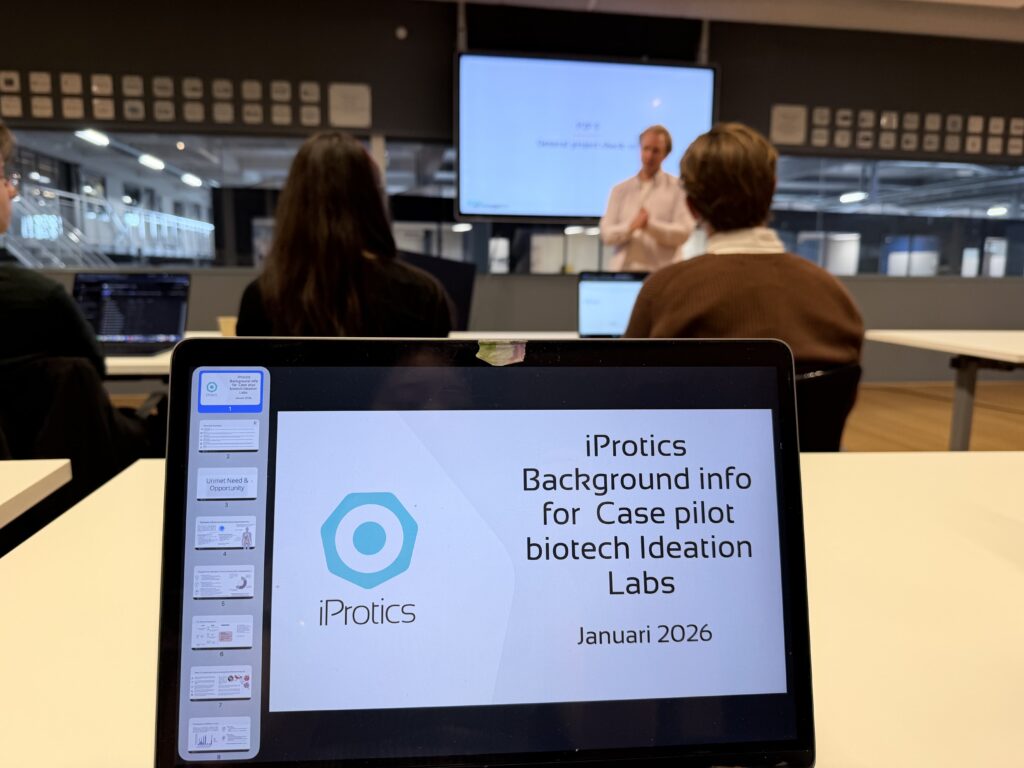
Inside TU Ideation Lab Workshop

The Project & Communicating Value

Their work focuses on a promising but still early-stage innovation: a therapy designed to treat certain types of blood cancer. This technology is in its pre-clinical phase and is not yet available to patients. As Kiki explains, “it’s a small molecule that can be used in different types of leukemia… and we’re exploring if it has a chance in those markets.”

Their challenge is to determine whether there is a need for this treatment in comparison to existing alternatives. Communicating the value of such an early-stage technology requires balancing transparency with potential. As Shakira explains “It’s about using the right terminology and highlighting the unique selling points”. “We’re clear that it’s still in the pre-clinical phase, but we also show what we know, that it could be safer and less toxic.” By explaining the current stage and the expected timeline, they can engage industry experts in meaningful discussions about its future.

Looking from the Market

The Ideation Lab experience enables engagement in the market, something both students found daunting at first but rewarding. Reaching out to industry experts taught them that persistence is key. As Shakira notes, “out of 100 people, maybe 10 or 20 will reply, but once they do, they’re often very open to talking.”

These conversations helped them navigate the complexity of the pharmaceutical landscape. For Kiki, understanding how new therapies are approved and adopted was a turning point. “At first, certain terms kept coming up in interviews, and I didn’t fully understand them,” she explains. “But after hearing them repeatedly, I started to see how the system works.” For Shakira, the biggest insight was identifying the real “customer”. “You start to understand who is involved and who makes decisions.” Weekly coaching sessions pushed them to think critically: “What is your hypothesis?” and “Why does this matter?” challenging them to move beyond assumptions and build evidence-based ideas.

Looking Ahead

This experience shaped how both students view their future. For Shakira, it reinforced her interest in entrepreneurship while building confidence. “I’ve learned how to reach out to people more easily,” she says, adding that the network and mentors gained through the program are useful for the future.

Kiki sees her path within the pharmaceutical field, though not necessarily as a founder. “It’s difficult to start a company in this sector without a strong research background,” she reflects, “but I could see myself working alongside a researcher as an entrepreneurial partner.”

Despite different ambitions, they both highlight communication and persistence as key lessons. Their experience reflects a shift in mindset, where innovation is not just about an idea, but about testing it, challenging it and bringing it to life.
Go beyond your studies with the Ideation Lab or start your own journey with Erasmus Enterprise.

Matching for impact: why the right partners are just as vital as the right idea

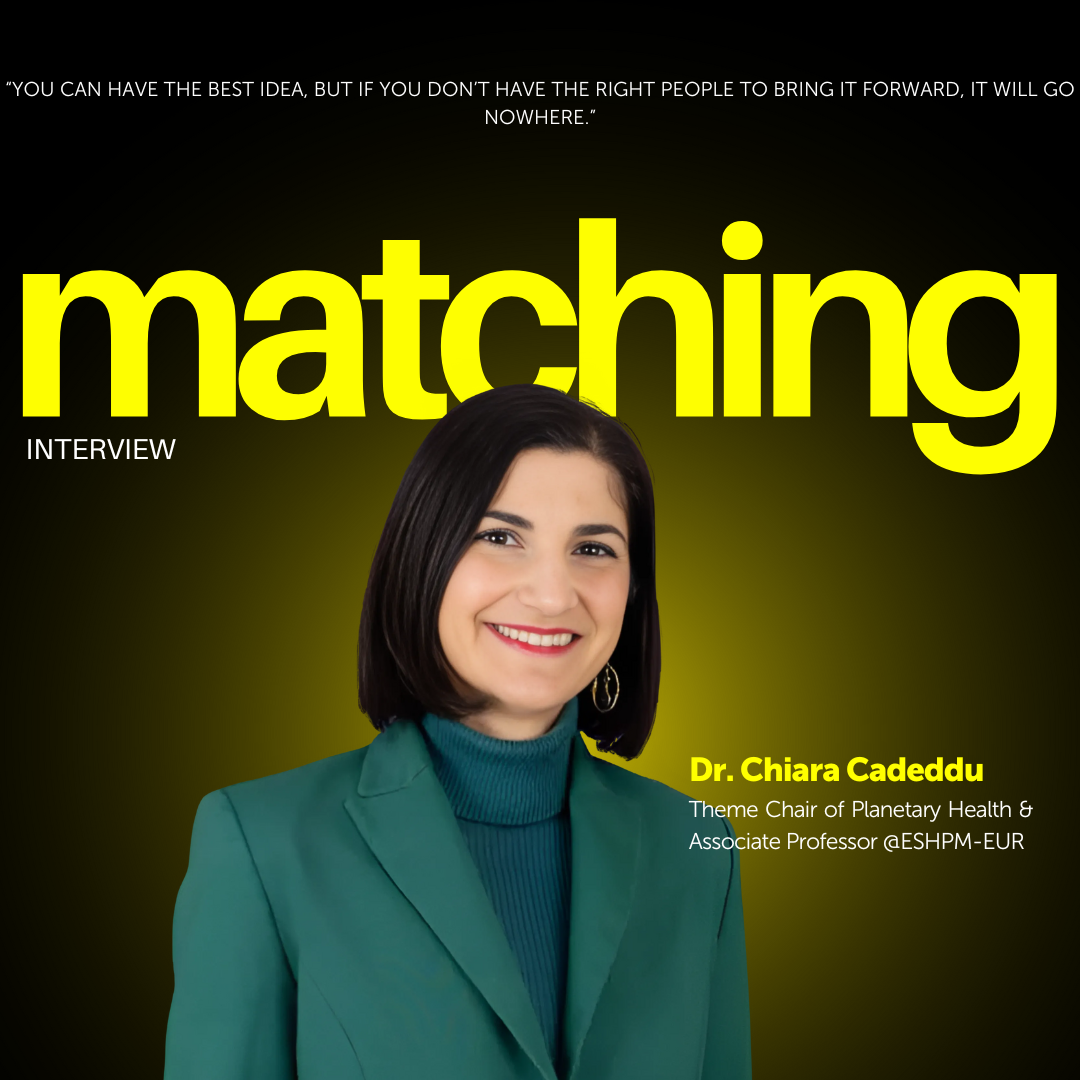
So far in the Impact Starting Guide series, we’ve discussed how entrepreneurship starts with fleeting revolutionary ideas, Eureka moments, and validating the ideas through experienced entrepreneurs and companies, but we have yet to discuss YOU… well, your team composition, or your matching phase of entrepreneurship. Throughout this article, we will introduce you to this new entrepreneurship phase while emphasizing Chiara Cadeddu’s best practices that you should keep in mind when matching with partners to ensure your venture’s success! 

Experienced matchmaker

Dr. Cadeddu is no stranger to the complexities of interdisciplinarity, a key factor in entrepreneurship, as she has a background in medicine, a PhD in public health, and over six years of research in planetary health, which led her to become the theme chair of the Planetary Health Alliance, a field that analyzes the intricate intersection between human health, ecosystems, and climate. 

Dr. Cadeddu, alongside her team of researchers, has been on a mission to change healthcare’s ecological footprint on our ecosystem. Their mission has taken root since 2024, when they received three-year funding from the European Union within the Horizon Europe Project. CARING NATURE re is a project that seeks to develop regenerative and sustainable solutions for healthcare systems by fostering collaboration between academics, private companies, and public institutions. 

Their interdisciplinary nature does not come only from the variety of disciplines presented in the team, but Caring Nature also transcends geographical borders, as they partner with 19 companies across 11 countries. This fact piqued our interest, as we were curious to see how the matching phase of entrepreneurship aligns with their program. So, we invited Dr. Cadeddu to sit with our team for an interview on matching.

Matching for success

According to our Impact Starting Guide, the step-by-step guide that supports your entrepreneurial journey, matching is the third step in entrepreneurship. This phase is characterized by developing your team and partners, and the secret recipe is made up of four steps:

  1. Identify your requirements: pinpoint the missing skills or expertise in your venture.
  2. Define the right composition: map out roles and required capabilities, knowing your team will evolve.
  3. Recruit co-founders: use role descriptions to find and interview potential team members.
  4. Identify potential partners: look within and beyond your network for aligned partners, and craft a clear value proposition to engage them.

“You can have the best idea, a Nobel Prize-worthy even, but if you don’t have the right people to bring it forward, it will go nowhere.”

Improving the match-making process

For Dr. Cadeddu, matching the right people to a project means more than checking skills off a list. It’s about shared purpose, complementary expertise, and aligned values. To ensure that the Caring Nature team has the best-fit people, they followed a dual approach:

  1.  Trusted networks: they reached out to collaborators they had worked with before, partners with proven alignment in values and ways of working.
  2. Strategic discovery: where gaps existed (for example, finding architectural expertise for sustainable healthcare buildings), they ventured into new territory. Tools from the European Commission, combined with good old-fashioned research and direct outreach, helped them expand their network with intentionality.

“For areas where we had no prior contacts, we just researched, sent emails, jumped on calls, and found alignment from there.”

This hybrid strategy made the consortium both rooted and adaptable, giving the team the flexibility to build something bold and resilient.

How to manage matching failures

Despite best efforts, even a well-matched team can face setbacks, as Chiara mentioned. “Months after the project launched, one partner withdrew due to internal organizational constraints,” a reminder that even the most committed collaborators can be limited by structures beyond their control. As Dr. Cadeddu views these challenges as inevitable obstacles in the life of a project, she advises entrepreneurs: 

“You can’t eliminate all risk, but you can manage it. Being clear about commitments and timelines from the beginning can help.”

What matters most is how you mitigate the setbacks, not how many you have or when you face them. For her team, the loss of a partner meant realigning resources, rethinking workflows, and integrating a new organization mid-project, while staying true to the project’s original mission.

Matching beyond business

In entrepreneurial environments, especially within the private sector, values can sometimes take a backseat to profit. But for projects like Caring Nature, where the goal is to make healthcare more sustainable, alignment on values is not optional, but foundational. 

“We want partners who are here not just for business, but because they believe in creating a better, greener world for future generations.”

This purpose-driven approach is what cements strong collaborations. Whether in academia or entrepreneurship, finding people who believe in the mission is what transcends a concept into a lasting contribution.

Final thoughts

Although the matching phase may not be the most glamorous part of building a venture, it is the most consequential. As Dr. Cadeddu’s experience shows, real impact requires more than innovation: it requires collaboration with people who are not just skilled, but also aligned in vision and values.

And that is where support systems like Erasmus Enterprise can make a difference. Although not professional matchmakers, we can help you find your match in business, support with idea validation, and connect you with the needed sources. Check out more about our services and the Impact Starting Guide for more entrepreneurial advice.

Validating to Success: Lessons from ChatLicense

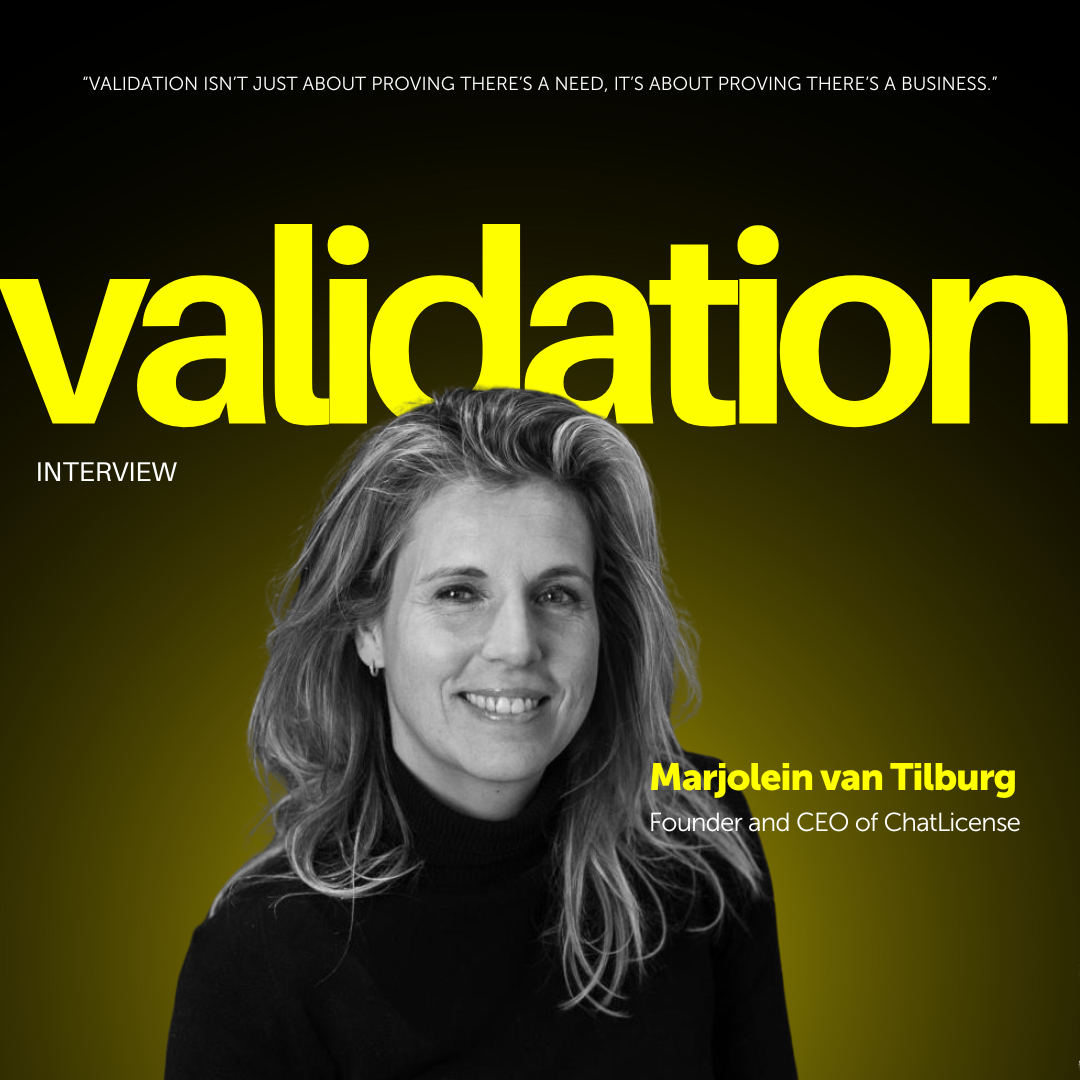
Bringing an idea to life is exciting, but turning it into a real, thriving business? That’s where things get tricky. In this article, we are sitting with Marjolein van Tilburg, the founder and CEO of ChatLicense. Her app helps kids and parents navigate the first smartphone experience, teaching digital responsibility in a fun and interactive way. But before ChatLicense became what it is today, Marjolein had to go through the rollercoaster ride of startup validation, figuring out if her idea was actually worth something.

From idea to reality

The idea for ChatLicense didn’t come from a boardroom brainstorm, it came from real life. As a mother of two, Marjolein saw firsthand how unprepared kids are when they get their first smartphone. One day, she realized: “We don’t just hand them car keys without driving lessons, so why are we doing that with phones?” That thought turned into ChatLicense, an app packed with quizzes, animations, and lessons to help kids use their devices responsibly.

But having a great idea is only step one. “Somebody invited me to pitch my idea,” Marjolein recalls. “I didn’t even know where to start. I was a lawyer, not an entrepreneur, and I certainly didn’t have the technical skills to build an app.” Despite her doubts, she built a pitch deck, took the stage, and…surprise! I won the competition. That was her first taste of validation: people actually believed in her idea.

The real test begins

Winning was a confidence boost, but the real challenge was ahead. As part of her prize, Marjolein got mentorship from a regional development organization. She expected to keep riding the high, but her mentor had a reality check for her: “You’re still making a lot of assumptions.”

Enter structured validation. Instead of assuming parents would love ChatLicense, she started asking them questions, real, open-ended ones. “I stopped asking, ‘Do you like my idea?’ and started asking, ‘How do you feel about giving your child a smartphone?’” The answers gave her valuable insights that helped shape the app into something parents actually wanted.

Bumps, pivots, and hard truths

Validation isn’t just about proving yourself right, but about being open to being wrong. “Sometimes the feedback isn’t what you expect, and that’s tough,” Marjolein admits. “But it also forces you to make your product better.”

One of her biggest lessons? Passion alone won’t pay the bills. “Impact startups love solving problems, but if nobody’s willing to pay for the solution, the business won’t last. Validation isn’t just about proving there’s a need, it’s about proving there’s a business.”

Lessons for entrepreneurs

Marjolein’s journey is packed with takeaways for anyone building a startup:

  1. Follow a framework – Books like The Mom Test can help you go from idea to execution without getting lost.
  2. Talk to real people – Don’t just ask for validation, but ask real users about their actual problems.
  3. Stay flexible – Be ready to pivot when feedback tells you to.
  4. Think about the business – Passion is great, but a solid revenue model keeps the lights on.

For all the entrepreneurs, Marjolein’s story is a great reminder: validation isn’t just about proving your idea is cool. It’s about making sure it can actually work in the real world.